Components
Tabs
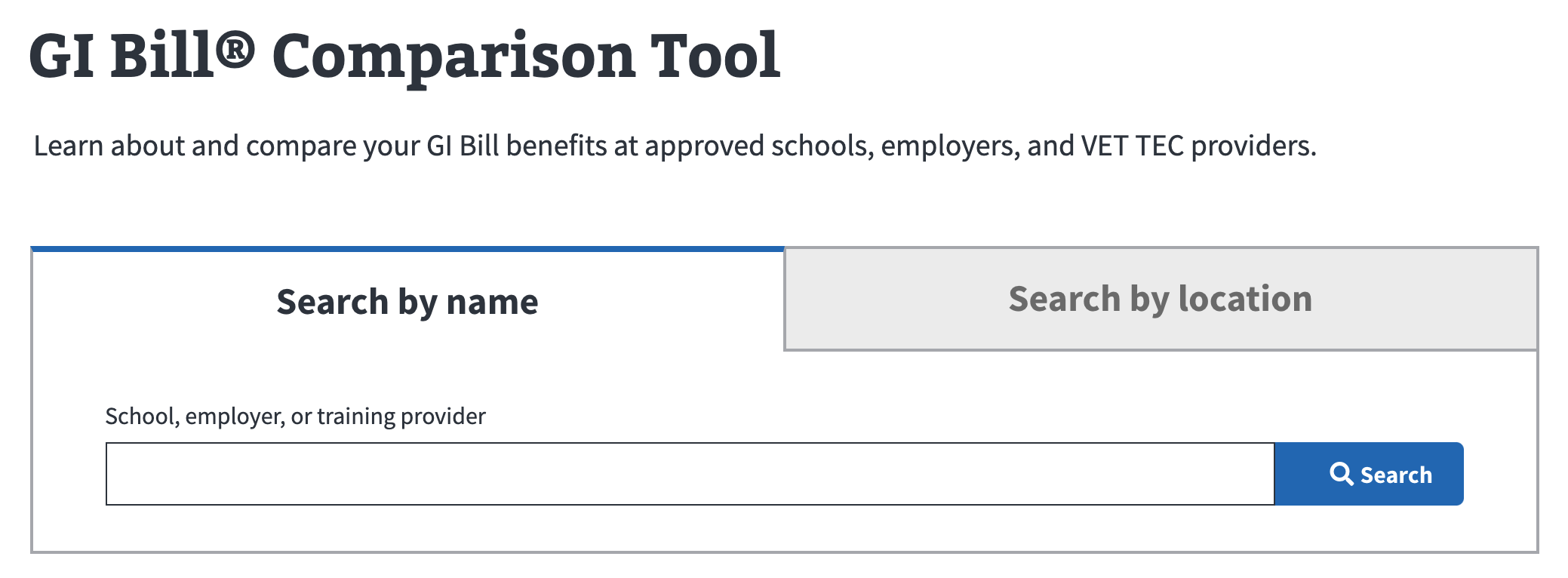
Use with caution: Available WebExamples
Web
Default
View va-tabs–default in Storybook
With second tab selected
View va-tabs–with-second-tab-selected in Storybook
Usage
When to use tabs
- Organize related content sections. Use tabs when you have multiple panels of content that are related but don’t need to be viewed simultaneously.
- Reduce cognitive load. Use tabs to present information into manageable sections, allowing users to focus on one section at a time.
When to consider something else
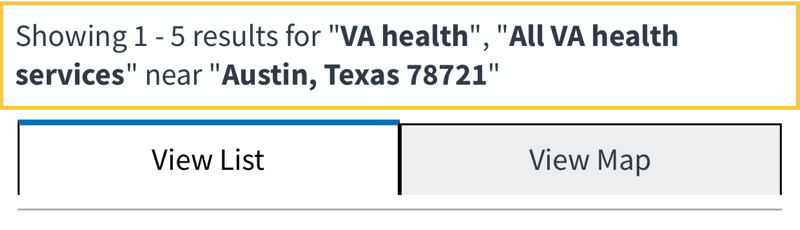
- Changing views of the same data. To let users easily toggle between a binary set of options to see different views of the same data, use a Button - Segmented component. For example, switching between viewing a list or a map.
- Chunking content. Consider using an Accordion to display 1 chunk of content at a time.
- Hierarchical content. If your content is hierarchical or sequential, consider using a single page of well-formatted headings and body text. Use the On this page component to navigate within a single page.
- Moving up or down in navigational hierarchy. Use the Side Navigation component to move up or down in hierarchy or when the content has over 4 or 5 sections.
- Search results and filtering. For displaying search results with different categories or filters, use the established Search results pattern instead.
How this component works
Tab overflow
The tab component works best when you need 3 or fewer tabs. If the tabs overflow on small screens, the component uses a scrollbar so that users can still navigate to all tabs. This isn’t ideal because horizontal scrolling makes tabs hard to find and scrollbar behavior isn’t consistent across browsers. When the component uses a scrollbar, a shadow appears to indicate there are more tabs. The scrollbar should only appear at high zoom levels or when the screen is smaller than 320px.
Tab panel
Tab panels are used as a container for the content associated with the selected tab. A 32px space between the tab panel and tabs is recommended for both desktop and mobile views. This is already included in the tabs component. If a different spacing is required the default spacing can be overridden.
Behavior
- Make sure the selected tab is highlighted and visually connected to the content below it.
- The first tab should be used for the default view.
Placement
- The tabs component should appear in a consistent location across desktop and mobile views.
- Place tabs below the page title and subtitle.
- Information relevant to all tabs can be placed above the tabs.
- Tabs can be used with the Side navigation component. Don’t add tab links to the side navigation, they should exist separately.
- Don’t use the On this page component with the tabs component.
Desktop view
Placement guidance
- Page title and subtitle
- Relevant content to all tabs
- Tabs component (full width of content area)
- Tab panel
Mobile view
Instances of tabs in production
See the tabs component discussion for more information on tabs used in production.
Content considerations
- Keep tab labels succinct and use plain language. Labels should be 1 to 2 words.
- Use sentence case for tab labels.
Use headers in tab panels
- Start tab panel content with a heading. Each tab panel should begin with a heading that describes the panel’s content.
- Maintain proper heading hierarchy. Ensure headings within tab panels follow logical order (
h2,h3,h4, etc.) to maintain document structure for screen readers and assistive technology. - Keep headings consistent across panels. Use similar heading patterns and levels across all tab panels for a cohesive experience.
- Consider the tab label and panel heading relationship. The panel heading should relate to and expand upon the tab label, providing clear context for the content that follows.
- Consider when headers may not be necessary. In some cases, a heading may not be needed if the tab panel contains a single, self-explanatory component (like a data table with a clear caption) or when the tab label fully describes the content and no additional context is needed.
Accessibility considerations
- Use clear, descriptive tab labels. Tab labels should help users understand the purpose and contents of each tab panel. Avoid vague labels like “Tab 1” or “More”.
- Place Tabs inside the main content region. Tabs should be located after the
h1within the<main>content region. - Don’t use Tabs for page-level navigation. Tabs are not a substitute for primary or secondary navigation. For navigating across different pages, use Side Navigation.
- Keep focus on the selected tab after activation. When a user activates a tab, focus should remain on the newly selected tab and not move into the tab panel. This helps keyboard and screen reader users stay oriented and easily navigate through the tab list. Users can choose to navigate into the panel content when they’re ready. Avoid auto-focusing inside the panel.
- Follow standard keyboard interaction patterns. Refer to W3C’s guidance for standard keyboard navigation for tabs.
Related
Component checklist
Web Platform
6 of 10 complete
Maturity
-
Guidance
-
Web
Examples, usage, code usage, content considerations, and accessibility considerations are all complete. -
Research
-
Web
VFS team conducted research on this component which is linked from this page. -
Stability
-
Web
Component has been in production for more than 3 months with no significant issues found. - Note: This component has mobile accessibility issues and should be used sparingly.
-
Adoption
-
Web
Multiple teams have adopted this component.
Accessibility
For more information on each category, see Accessibility testing for design system components.
-
Platform - Web
- Last audit date
- 2025-07-16
-
Code review - Pass
-
Readability - Pass
-
Automated scans - Pass
-
Use of color - Pass
-
Text resizing, zoom, and magnification - Pass
-
Screen readers - Pass
-
Input and interaction methods - Pass
Code assets
-
Variations
-
Web
Storybook includes all variations (style, size, orientation, optional iconography, selection, error state, etc.) -
Responsive
-
Web
Component depicted in all responsive breakpoints. -
Interactive states
-
Web
Includes all interactive states that are applicable (hover, active, focus, keyboard focus, disabled). -
Tokens
-
N/A Web
All design attributes (color, typography, layout, etc.) are available as tokens. -
Internationalization
-
N/A Web
Describes i18n attributes.
Visual assets
-
Variations
-
Web
Figma library includes all variations (style, size, orientation, optional iconography, selection, error state, etc.) -
Responsive
-
Web
Component designed to work in all responsive breakpoints. -
Interactive states
-
Web
Includes all interactive states that are applicable (hover, active, focus, keyboard focus, disabled). -
Tokens
-
N/A Web
All design attributes (color, typography, layout, etc.) are available as tokens.
Legend:
-
Complete -
Incomplete - N/A Not applicable
Provide feedback
Share your feedback, report issues, or suggest improvements for the Tabs component. Your input helps us make the design system better for everyone.
- Get immediate support in #platform-design-system for technical or urgent issues.
- Share feedback about the Tabs component in the dedicated discussion thread.
- Explore all feedback channels for additional ways to share your input.